Mobile Money
Mobile money is a digital form of payment that allows users to send and receive money using their mobile phones. The service allows users to store money in digital wallets. They can then use this to make payments, transfer money and even withdraw cash from authorized agents.
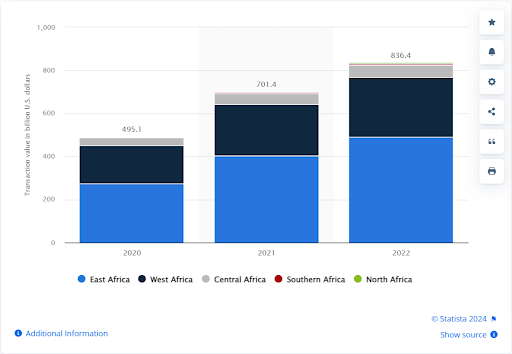
“Africa now accounts for 70% of the world’s $1 trillion mobile money value. The value of Africa’s mobile money transactions edged up 39% to $701.4 billion in 2021 from $495 billion in 2020.” (QZ) More recent stats say that this figure and other vital signs of mobile money penetration are only going to keep going up, especially in East and West Africa.
A short history
Safaricom, the biggest mobile phone service in Kenya, launched mobile money for the first time in Africa in 2007. Users of the M-Pesa program could send, receive and store money from their phones, and for the first time in Africa, this new digital payment platform allowed people in remote places to be included financially. It took off almost immediately and other African countries followed suit. Now, driven by the wild mobile phone penetration in Africa, more than 150 mobile money providers operate in 47 different African countries. Mobile money has now established itself as a commonplace element of the continent’s financial landscape.
The Consumer Behaviour Shift
Mobile money has included rural communities where the option of traditional banking does not exist (and is not coming soon). It has also softened the security risks associated with cash transactions in such locations. From the marketing perspective, consumers who have adopted mobile money use in their everyday lives are a different kind of consumer from the ones who have not. What changes in consumer behaviour should brands be aware of?
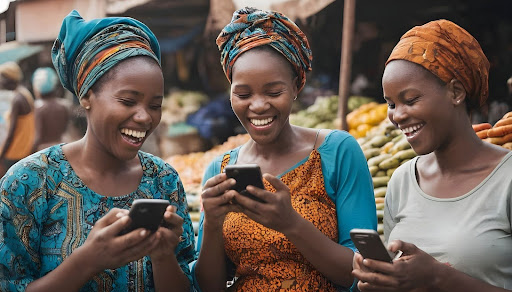
A. Mobile money has increased willingness to pay (WTP) among consumers. Consumers are much more likely to find the convenience and availability of mobile money attractive. This could trigger more purchases per user than before. It could also (more importantly) cause an aversion toward businesses that do not offer mobile money payment.
B. Mobile money penetration also means consumers now have more options apart from the in-person shopping experience available from the brick-and-mortar businesses within their immediate location. The combination of the freedom to shop from brands far away and the convenience of paying for products and services with mobile money opens up new audiences for brands in Africa.
Mobile Marketing
With more people using mobile devices for transactions and browsing, it’s crucial for brands to meet customers where they are—on their phones. Here are some mobile marketing strategies that marketers can look to implement:
Mobile-First Approach:
Marketers need to prioritize mobile channels in their strategies to reach the growing base of mobile money users. This involves optimizing websites and advertising content for mobile devices, developing mobile apps that facilitate seamless transactions, and implementing SMS or app-based marketing campaigns. Emphasizing mobile-friendly user experiences will ensure that brands remain accessible and relevant to the majority of consumers who rely on mobile money for financial transactions.
Partnerships with Mobile Money Providers:
Collaborating with mobile money providers offers marketers the opportunity to tap into their extensive networks and customer databases. By forming strategic partnerships, marketers can access valuable consumer insights, target audiences more precisely, and facilitate seamless payment experiences for their products or services. This collaboration can enhance brand visibility and drive customer engagement within the mobile money ecosystem.
Localized and Culturally Relevant Content:
To resonate with diverse African audiences, marketers must craft content that reflects local languages, customs, and preferences. Understanding the unique socio-economic contexts of different regions is essential for tailoring marketing messages that resonate with consumers using mobile money. By incorporating culturally relevant imagery, language, and storytelling into their campaigns, marketers can build trust and drive brand loyalty among African consumers who are embracing mobile money as a preferred payment method.
As part of its collaborative campaign for Prudential Insurance, Pulse Ghana deployed a wide-reaching SMS mobile marketing initiative which delivered over 1 million messages to potential customers of Prudential Insurance, people who could not be reached via the internet.
This initiative was a mobile-first approach. It also involved a partnership with telecommunications providers (mobile money providers). The title of the campaign was Mekrakrawa, a word in the local language which translates to installmental payments. This clearly communicates product affordability to the target market in a way that is localized and culturally relevant.
If you’re interested in a mobile marketing campaign in Africa, the marketing teams in all 6 markets where Pulse operates have the expertise and experience to deploy this from end to end and deliver on campaign objectives.
Pulse also offers video production and social media management capabilities. To learn more about mobile marketing or to partner, get in touch.